

Air travel does not always go as planned. Flight delays, cancellations, baggage problems, refund disputes, and customer service issues can leave travelers frustrated and unsure where to turn. Fortunately, the U.S. Department of Transportation (DOT) provides a formal process that allows passengers to raise concerns and seek accountability from airlines operating in the United States.
Understanding how to file DOT complaint against airline companies can help travelers protect their rights, resolve disputes, and encourage better service standards across the aviation industry. This guide explains current DOT regulations, passenger protections, refund policies, complaint procedures, and practical steps travelers should follow in 2026. If you need assistance understanding travel-related concerns, you may also contact support specialists at +1-855-869-7071.
This article includes the latest airline policy updates and booking changes applicable for 2026.
Understanding DOT Consumer Protection Rules
The DOT oversees airline operations and enforces passenger protection regulations designed to ensure fair treatment.
Before learning how to file DOT complaint against airline providers, it helps to understand what the agency regulates.
Key Areas Covered by DOT Consumer Protection
The DOT focuses on:
- Airline refund obligations
- Tarmac delay protections
- Advertising transparency
- Baggage compensation requirements
- Overbooking and denied boarding compensation
- Disability-related accommodations
- Customer service compliance
- Schedule change notifications
- International passenger rights involving U.S. carriers
These regulations form the foundation of modern DOT passenger rights protections and help travelers resolve disputes more effectively.
Common Reasons Travelers Contact the DOT
Passengers often submit DOT airline complaints involving:
- Unexpected flight cancellations
- Significant schedule changes
- Delayed refunds
- Lost baggage
- Damaged luggage
- Inaccurate fare advertisements
- Poor customer service experiences
- Compensation disagreements
- Accessibility concerns
When airlines fail to resolve issues directly, travelers may decide to report airline to DOT authorities for review.
New User Travel Booking Discounts
Many travel platforms now offer promotional savings for first-time users.
Travelers may receive:
- Up to 50% off select flight bookings
- Introductory coupon codes
- Mobile app-exclusive discounts
- Seasonal fare promotions
- Flexible booking incentives
Combining these discounts with flexible travel dates, advance booking strategies, and fare comparisons can significantly reduce overall travel costs while helping travelers avoid expensive last-minute purchases.
When Should You File a DOT Complaint Against an Airline?
Not every inconvenience requires federal involvement. In most cases, passengers should first attempt resolution directly with the airline.
Situations That May Justify a DOT Complaint
You may want to file DOT complaint against airline companies when:
- Refund requests remain unresolved
- Airlines ignore written complaints
- Compensation is denied without explanation
- Baggage claims are mishandled
- Accessibility accommodations are not provided
- Schedule changes create substantial disruptions
- Consumer protection regulations appear violated
Situations Better Resolved Directly With Airlines
Often the airline can address:
- Seat assignment issues
- Minor service complaints
- Meal preference concerns
- Loyalty program questions
- Basic reservation adjustments
Escalating through the airline's own airline customer complaint process often produces faster resolutions before federal involvement becomes necessary.
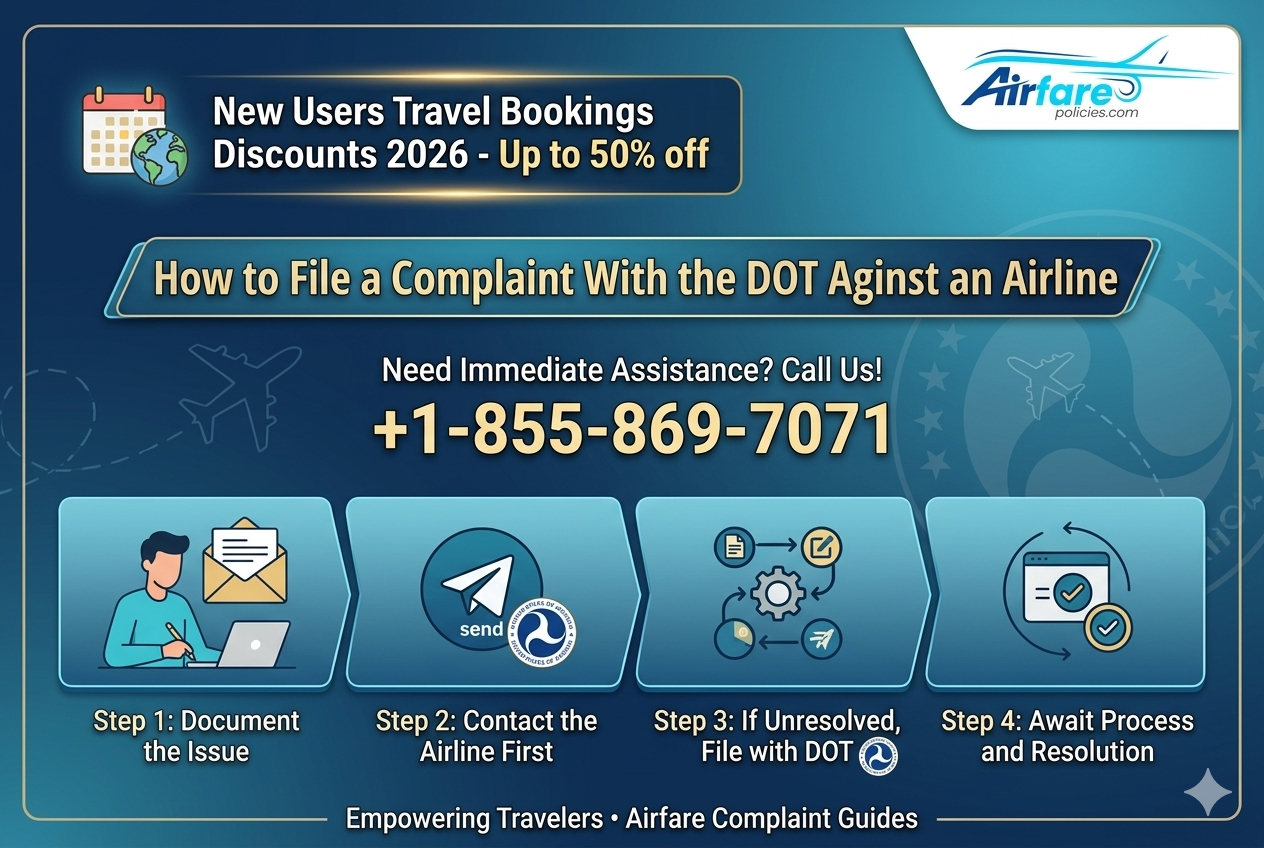
Step-by-Step: How to File a Complaint With the DOT Against an Airline
The process is straightforward when proper documentation is available.
Step 1: Gather Supporting Documents
Collect relevant evidence including:
- Flight confirmation emails
- Boarding passes
- Refund correspondence
- Receipts
- Baggage claim reports
- Customer service transcripts
- Delay notifications
Detailed records strengthen your case and support any future airline refund dispute investigation.
Step 2: Contact the Airline First
Most carriers require passengers to:
- Submit written complaints
- Allow response time
- Provide supporting documentation
- Follow internal escalation channels
Keep copies of all communications.
Step 3: Complete the Airline Complaint Form
If the airline does not provide a satisfactory resolution, complete the official airline complaint form through the DOT's consumer complaint system.
Include:
- Personal information
- Flight details
- Airline name
- Description of the issue
- Requested resolution
- Supporting documents
Travelers needing help understanding documentation requirements sometimes seek guidance through independent travel support services at +1-855-869-7071.
Step 4: Submit the Complaint
After submission:
- DOT reviews the complaint
- The airline receives a copy
- The carrier must respond
- Complaint trends may trigger investigations
The DOT generally does not act as a private attorney but monitors airline compliance and consumer protection obligations.
Step 5: Monitor Responses
Keep track of:
- Complaint confirmation numbers
- Airline responses
- Additional document requests
- Resolution timelines
Maintaining organized records can simplify future airline issue escalation efforts if needed.
DOT Refund Policies Travelers Should Know
Refund disputes remain one of the most common reasons passengers file DOT complaint against airline operators.
When Airlines Must Provide Refunds
Current DOT regulations generally require refunds when:
- Flights are canceled by the airline
- Significant schedule changes occur
- Services purchased are not delivered
- Passengers choose not to accept alternative arrangements
Refunds typically apply regardless of fare type when the airline initiates the qualifying disruption.
Refund Requests: Best Practices
To improve success rates:
- Submit requests promptly
- Save confirmation numbers
- Retain cancellation notices
- Document conversations
- Follow airline procedures carefully
These practices help support any future airline refund dispute claims.
Example Scenario
A traveler books a flight from New York to Los Angeles. Two days before departure, the airline changes departure time by several hours, causing missed connections and hotel reservations.
Depending on the circumstances and applicable policies, the passenger may qualify for a refund rather than accepting the modified itinerary.
Flight Delays and Airline Cancellation Rules
Delays and cancellations remain among the leading causes of DOT airline complaints.
What Travelers Should Expect
When disruptions occur, airlines often provide:
- Rebooking options
- Travel credits
- Meal vouchers in certain circumstances
- Hotel accommodations when applicable
- Customer support assistance
Policies vary among carriers, but DOT requirements continue to emphasize transparency and passenger communication.
Filing an Airline Delay Complaint
Passengers may submit an airline delay complaint when:
- Information is misleading
- Customer support becomes inaccessible
- Required accommodations are denied
- Refund obligations are not fulfilled
Documentation significantly improves the effectiveness of complaint submissions.
Airline Schedule Changes and Passenger Rights
Schedule changes can affect vacations, business trips, and connecting flights.
Important Passenger Protections
Travelers should:
- Review revised itineraries immediately
- Compare alternative routing options
- Evaluate refund eligibility
- Confirm baggage transfers
- Request clarification in writing
Understanding DOT passenger rights helps travelers make informed decisions when schedules change unexpectedly.
Real-World Airport Example
A passenger departing from Chicago for Miami receives notice of a six-hour schedule modification.
Possible options may include:
- Accepting the revised flight
- Choosing alternative routing
- Requesting a refund if eligible
- Contacting customer service for accommodations
Prompt action often prevents additional travel complications.
Lost, Delayed, and Damaged Baggage Claims
Baggage issues generate thousands of complaint against airline service reports every year.
What To Do Immediately
At the airport:
- Report the issue before leaving
- Obtain a baggage report number
- Save receipts for essential purchases
- Photograph damaged items
- Request written claim instructions
Compensation Considerations
Compensation may depend on:
- Domestic versus international travel
- Item value
- Airline policies
- Applicable regulations
- Supporting documentation
Passengers should always retain proof of ownership for valuable belongings.
Overbooked Flights and Denied Boarding Rights
Airlines occasionally sell more seats than available.
When volunteers are insufficient, some passengers may experience involuntary denied boarding.
Your Rights During Overbooking Situations
Travelers may be entitled to:
- Written explanations
- Alternate transportation
- Monetary compensation
- Rebooking assistance
- Customer service support
Federal regulations establish compensation requirements under qualifying circumstances.
Example Scenario
A traveler checks in on time but cannot board due to overbooking.
The airline may owe compensation depending on arrival delays and specific operational factors.
Understanding these protections helps travelers effectively report airline to DOT authorities if obligations are not met.
Comparing Major Airline Complaint and Support Practices
While DOT regulations apply broadly, airline customer service approaches differ.
Airline AreaTypical PracticeRefund RequestsOnline claim portalsSchedule ChangesEmail and app notificationsBaggage ClaimsAirport reporting desks and digital formsComplaint HandlingCustomer relations departmentsEscalation OptionsSupervisors and executive support channelsDOT Compliance ResponsesFormal written responses
Major carriers generally maintain structured complaint departments, but response times and customer satisfaction levels can vary considerably.
Tips to Avoid Airline Disputes and Unnecessary Fees
Many problems can be prevented before departure.
Smart Booking Recommendations
Travelers should:
- Compare fare classes carefully
- Read cancellation terms
- Purchase appropriate travel protection
- Monitor schedule updates
- Keep copies of confirmations
- Understand baggage limits
- Verify passenger information before payment
If questions arise before travel, independent assistance may be available through support services at +1-855-869-7071.
New User Travel Booking Discounts
When evaluating airfare options:
- Look for new-user promotions offering up to 50% off
- Compare booking platforms
- Travel during off-peak seasons
- Use flexible departure dates
- Track fare changes
Combining discounts with informed booking decisions often produces substantial savings.
How to Escalate an Airline Issue Effectively
Sometimes standard customer service channels fail to resolve problems.
Airline Issue Escalation Checklist
Before escalation:
- Save all communications
- Request written responses
- Document representative names
- Record dates and times
- Organize receipts and evidence
A well-documented case improves outcomes during any airline issue escalation effort.
Related Article - New DOT Airline Refund Rules Explained for Travelers in 2026
Independent Travel Assistance Disclaimer
We are an independent travel assistance agency, not officially affiliated with any airline, but here to help you with your travel queries and support you every step of the way.
Organizations such as Airfare Policies may also provide general travel information and guidance regarding complaint procedures and passenger protections.
Frequently Asked Questions
Where can I get help understanding the airline customer complaint process?
Travelers seeking guidance about documentation, refunds, and complaint preparation may contact travel support resources at +1-855-869-7071 for general assistance.
How do I file a complaint with DOT for airlines?
To file a complaint with the U.S. Department of Transportation (DOT), first try resolving the issue directly with the airline. If the problem remains unresolved, submit a complaint through the DOT’s Aviation Consumer Protection website. Provide flight details, supporting documents, receipts, and correspondence. The DOT forwards complaints to airlines for response and tracks compliance.
Does complaining about an airline do anything?
Yes, filing a complaint can make a difference. Airlines are required to review and respond to complaints forwarded by the DOT. Consumer complaints help regulators identify patterns of misconduct, service failures, refund issues, or regulatory violations. Large numbers of complaints may lead to investigations, enforcement actions, or policy improvements affecting passengers.
Does the DOT regulate airlines?
Yes, the U.S. Department of Transportation regulates many aspects of airline operations related to consumer protection. It oversees refund requirements, advertising practices, denied boarding compensation, disability accommodations, baggage rules, and complaint handling. The DOT enforces regulations designed to ensure airlines treat passengers fairly and comply with federal transportation laws.
What airline is most complained about?
The airline receiving the most complaints can vary from year to year depending on passenger volume, operational disruptions, cancellations, delays, and customer service performance. The DOT publishes monthly Air Travel Consumer Reports showing complaint statistics by carrier. Larger airlines often receive more total complaints because they transport significantly more passengers.
Conclusion
Learning how to file DOT complaint against airline providers empowers travelers to protect their rights when disruptions occur. Whether dealing with cancellations, baggage problems, denied boarding, schedule changes, or an airline refund dispute, understanding federal regulations can make the resolution process smoother and more effective.
Keep detailed records, follow the airline's complaint procedures first, understand current DOT consumer protection requirements, and escalate concerns when necessary. By combining smart booking strategies, flexible travel planning, awareness of DOT passenger rights, and available new-user discounts of up to 50%, travelers can reduce costs, avoid common mistakes, and navigate disruptions with confidence.
For general travel assistance and guidance regarding airline concerns, passengers may also reach out at +1-855-869-7071.